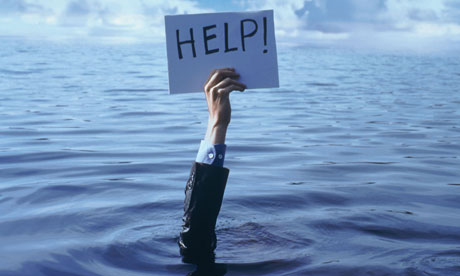
During our discussion, it seemed the Insiders focused on only a handful of challenges in the workplace. These will be listed below along with the highlights of our discussion.
_______________________________________________________________
• Stress
Stress can be an extremely debilitating factor that often negates a person's success in the workplace. It is silent, unseen, and affects everyone differently. Therefore, it is often a hard thing to deal with. The Insiders had some answers here, however, sharing their own tips for dealing with anxiety. Some members described their stress as being very physical in nature, and so they deal with it accordingly by using therapy balls or even a small trampoline to bounce on and get rid of that built up energy. Other members shared more conventional methods of managing stress, such as listening to calming music or exercising.
The trend over the past twenty years for most people in the workforce has been a drastic increase in productivity matched with income levels that have roughly stayed the same. As such, many in the workforce feel overworked and stressed out, handling by themselves what two or three people managed in the past. With this in mind, we concluded that stress is something that has to be managed. It should be an important part of any person's life and should be addressed on a daily basis.
• Boredom
Some of our Insiders expressed an interesting challenge they have while on the job — that of boredom. While many jobs present high-stress situations, there are also jobs out there that include lots of down time. To the aforementioned overworked individual, this might seem like a good thing, but as any person who has worked in retail during slow hours will tell you, it can truly be a nightmare.
One of our members prefaced our entire discussion on boredom by stating that he often seeks out things to do when things get slow at the place he works. By doing this, he said, he avoids boredom and shows his supervisor that he values his job and has a healthy work ethic. With the popularity of smartphones, I imagine this as an opportunity often overlooked. An employee cannot complain of boredom if there are still responsibilities to meet.
If, however, you find yourself bored to tears with nothing else to do, there are some things you can do. If it doesn't interrupt your ability to meet customers' needs, listening to music or audiobooks might be the way to go. One member said that he does just this at his job as a document processor. Speaking of customers, interacting with them is a great way to avoid boredom (and it shows a proper work ethic). And finally, you might consider making menial tasks fun in your own way: challenge yourself, get coworkers involved, inject some humor into the task. A little creativity can truly be a boredom killer.
• Multitasking
When this topic came up in discussion, one of our members made a very clear, decisive statement: "Multitasking is a myth." In researching this a bit since our meeting, it seems to be the case. From an article featured on NPR, this statement rings true: "The research is almost unanimous, which is very rare in social science, and it says that people who chronically multitask show an enormous range of deficits. They're basically terrible at all sorts of cognitive tasks, including multitasking."
The article can be found here.
• Prioritizing
If multitasking, then, is essentially a dead end, what are we left with? Basically, the Insiders determined that prioritizing rather than multitasking is the way to go. That, of course, can be a challenge in and of itself. Figuring out what tasks one has to complete is the first step, but then figuring out the order in which to do those things is the next one.
Making lists is always helpful. One member said that he lists out everything he can think of that he has to get done. Purging one's mind of those thoughts instantly reduces anxiety — you have gotten it "out of your system" — and it helps to see those responsibilities laid out. After this, ask yourself what requires immediate attention. You can work your backwards from here, deciding what needs to be done before the day's end, what needs to be caught up on, and what can wait. Essentially, designating a system for this is the way to go — it might take some practice to effectively gauge the order in which tasks should be completed, but this will go a long way in helping you make correct decisions.
BELOW, SHARE YOUR OWN CHALLENGES IN THE WORKPLACE. HOW HAVE YOU DEALT WITH THEM? WHAT ADVICE WOULD YOU GIVE THOSE WHO ARE RELATIVELY NEW TO THE WORKING WORLD? LET US KNOW!